Your Next Hire Might Be an AI That Never Sleeps — What is an Ambient AI agent?
 Matan Weksler7 min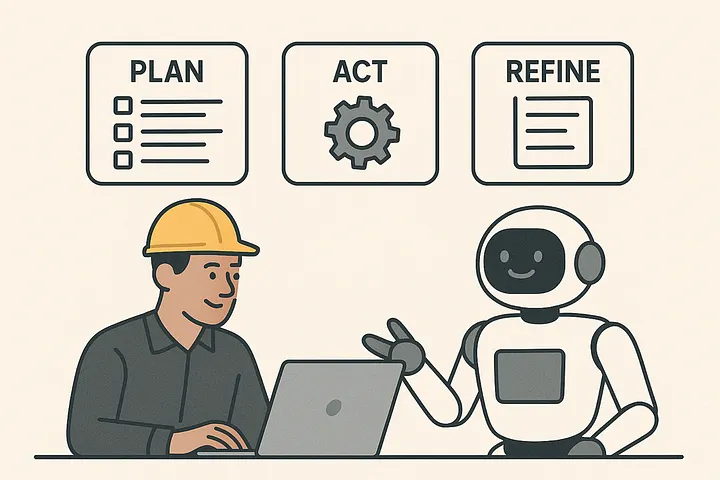
How long-running AI agents are turning preconstruction from a manual, high-risk scramble into a proactive, always-on digital workforce.
If you're in the construction industry, you know the drill. The preconstruction phase is a high-wire act of juggling tight deadlines, razor-thin margins, and mountains of paperwork. For mechanical, electrical, and plumbing (MEP) contractors and other trades, it's a frantic race to prepare bids, perform quantity takeoffs, and coordinate with a dozen other teams, all before a single shovel hits the ground. It's stressful, labor-intensive, and a single mistake can send ripples of cost overruns and delays through the entire project.
What if you had a team member who could read every page of a 1,000-page spec book in minutes, never miss a design change, and work 24/7 to find risks before they become problems? This isn't science fiction. It's the promise of Long-running Ambient AI agents, a new class of artificial intelligence poised to become the most valuable player on your preconstruction team.
From Simple AI Tools to Digital Teammates
We've all used AI tools like ChatGPT. You ask a question, and it gives you an answer. It's powerful, but it's like a power drill: useful, but only when you pull the trigger.
Long-running AI agents are something else entirely. They're not just tools, they're collaborators. Think of them as the craftsman, not the drill.
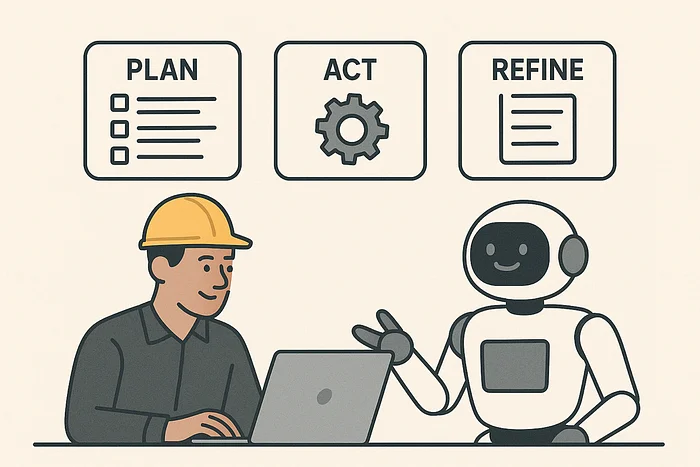
Instead of issuing one-off commands, you give an agent a goal, say, "Prepare a competitive bid for Project Titan." From there, it operates like a capable project engineer, breaking the task into manageable steps:
- Plan: "First, I'll review the bid documents. Then I'll do a quantity takeoff, price materials and labor, and finally draft the proposal."
- Act: It taps into your systems — accessing documents, integrating with your BIM models, and pulling data from cost databases.
- Refine: It doesn't stop at a first draft. If it notices missing information, it might ask, "The plans don't specify site conditions. Can you clarify?" before proceeding.
This agent keeps context. It remembers your company's past projects, preferences, and the feedback you've given it. It's a persistent, evolving partner.
But we can go even further, with ambient, reactive agents that add a new layer of intelligence:
- Always On, Always Aware: These agents monitor ongoing activity — document uploads, model changes, emails, schedule shifts, and act when it matters.
- Parallel Collaboration: Multiple agents can run simultaneously, each focused on a different task — bidding, clash detection, supply tracking. No more single-threaded chatbot sessions.
- No Rush, Just Results: These agents don't need to respond instantly. They can plan, reflect, query multiple APIs, and even coordinate among themselves to get it right.
This is more than automation. It's a shift from tools to teammates — persistent, adaptive, and always learning from your projects and your feedback.
Giving Your Preconstruction Team Superpowers
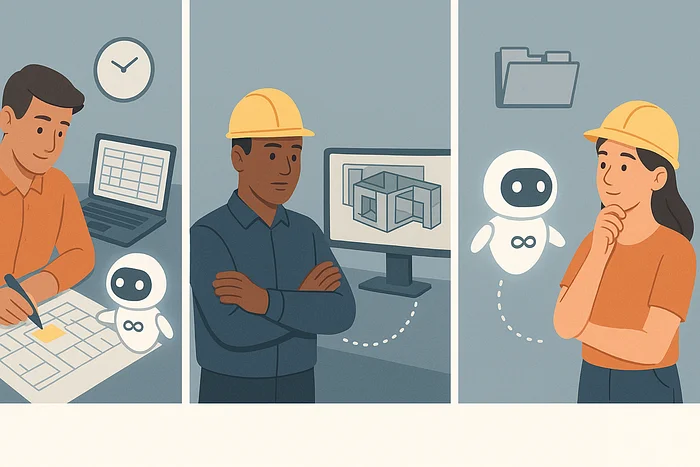
So, how does this digital teammate solve the real-world headaches of preconstruction?
1. The Super-Estimator: From Weeks to Hours
Preparing a bid is a high-stakes grind. Teams spend days, even weeks, manually poring over drawings to count every fixture and pipe run (quantity takeoffs) and pricing it all in unwieldy spreadsheets. A single missed detail can wipe out a project's profit.
An AI agent acts as a super-estimator. It can ingest an entire bid package and, in minutes, highlight every requirement relevant to your trade — no more manual searching through hundreds of pages for that one buried clause about a specific fire code. It then analyzes the 2D or 3D plans to perform an automated, highly accurate quantity takeoff. One plumbing sub using a similar AI-assisted tool cut a three-day takeoff task down to just eight hours, avoiding costly errors.
Finally, the agent can suggest pricing by analyzing your company's historical cost data and real-time market prices, giving you a data-driven starting point for your bid. The human expert is still in charge, but they're now focused on strategy and final review, not tedious grunt work.
2. The Ultimate Coordinator: No More Collisions
One of the costliest problems in construction is poor coordination. An HVAC duct clashing with a structural beam, or electrical conduits vying for the same space as plumbing lines, can lead to expensive rework on site.
An AI agent is the ultimate coordinator, acting as a vigilant air traffic controller for your project. Instead of running clash reports periodically, the agent can continuously monitor the BIM model. When a conflict arises, it doesn't just flag it; it can notify the relevant parties and even suggest potential solutions.
Furthermore, it ensures everyone is working from the latest plans. The moment an architect uploads a revised drawing, the agent detects it, compares it to the old version, and sends a summary of the changes to your team: "Heads up, the wall on Level 2 moved six inches." This simple act prevents the catastrophic mistake of building from an outdated blueprint.
3. The Ever-Learning Apprentice: Capturing Experience
One of the biggest challenges in construction is losing institutional knowledge when a senior expert retires. All those years of wisdom on which clients are difficult, which materials have long lead times, and what to watch out for on certain project types can simply walk out the door.
A long-running AI agent solves this by learning from every project.
It tracks the project's entire lifecycle. If an estimate was off, it analyzes why — was it an unforeseen site condition or an optimistic labor estimate? It then incorporates that lesson into its model. The next time a similar job comes up, its recommendations will be smarter. If you correct the AI ("No, don't use that supplier, their lead times are too long"), it remembers.
Over time, the agent becomes a living archive of your company's collective experience, constantly improving and turning every project — good or bad — into a learning opportunity that makes the next one better.
What Makes Those Agents Game-Changing?
Long running — ambient agents differ due to several key attributes:
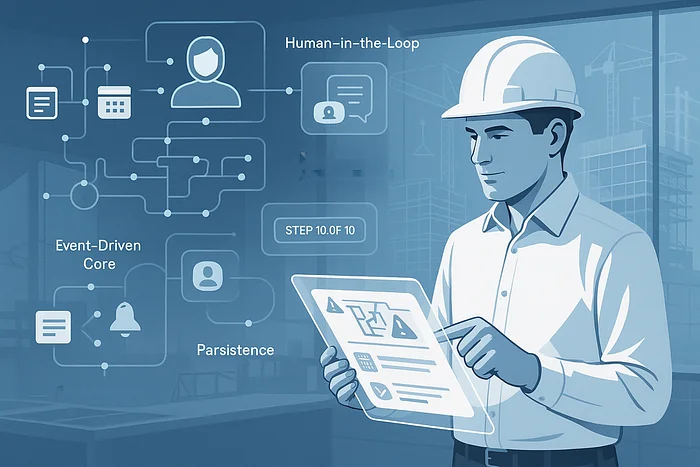
- Event-Driven Core: Triggered by document uploads, calendar events, site alerts, not by explicit user commands.
- Human-in-the-Loop UX: They notify you, ask clarifying questions, or request review/approval only as needed.
- Persistence & Time-Travel: Agents maintain state across sessions: you can pause their work, inspect step #10 of 100, tweak it, and resume, crucial for trust and transparency.
- Parallel & Complex Workflows: Since latency isn't critical, agents can carry out multi-step processes — planning, calling tools, reflection without user waiting.
See how Workshop runs always-on agentic workflows tuned to your trade →
The Road Ahead: From Assistant to Digital Worker
Of course, this transformation won't happen overnight. There are challenges to overcome.
- Data Quality: AI is only as smart as the data it's fed. Construction data is often messy and siloed in different systems. Companies will need to get their digital house in order to get the most out of AI.
- Trust and People: Construction is a relationship-based industry, and many are skeptical of "black box" technology. Building trust will require transparency, starting with small, low-risk tasks and demonstrating clear value before handing over more critical responsibilities.
- Human Oversight: An AI agent is an assistant, not the boss. The final decisions and responsibility will always rest with human experts. The goal is to augment human intelligence, not replace it.
But the vision is clear and compelling. We are moving from AI as a passive tool to AI as an active worker.
Imagine a future where your AI agent gives you a morning briefing:
- "Good morning. I've flagged a potential clash between the new plumbing layout and the steel on Level 3. I've scheduled a coordination meeting with the structural team."
- "The supplier for the primary switchgear just announced a 2-week delay. I've analyzed the schedule and suggest resequencing the drywall installation to avoid crew downtime."
- "Based on the last five projects of this type, we are at high risk of a budget overrun in Division 26. I've highlighted the specific line items to review."
This isn't about replacing project managers; it's about augmenting them with a level of insight and proactivity that was never before possible. It's about freeing up your best people from the drudgery of data-wrangling so they can focus on what they do best: building relationships, solving complex problems, and delivering exceptional projects.
The blueprints for this new era are drawn. It's time to let the digital workforce help us build.