Why search is going to change forever
 Nadav Orren8 min
Imagine you're looking for a recipe for a vegetarian dinner party. You could flip through cookbooks, search Google, or ask a friend. Each approach has trade-offs — and the same is true for how we search through project documents, specifications, and corporate knowledge bases.

The Problem with Traditional Search
Traditional search methods have fundamental limitations. They work by matching keywords rather than understanding what you actually want. Consider a complex housing search requiring multiple criteria: affordable 3-bedroom homes, good schools, reasonable commute times, and low crime rates. Traditional methods force users to manually cross-reference dozens of browser tabs and information sources.
Researchers and librarians historically spent months or years manually synthesizing information across multiple sources—a labor-intensive process that persists today.
Large Language Models: Promise and Limitations
Large Language Models like ChatGPT offer semantic understanding but face critical constraints. Despite their capabilities, they struggle to reliably process more than a few dozen pages of text without confusion. With corporate knowledge bases containing millions of pages, LLMs cannot handle serious research tasks requiring comprehensive data analysis.
Semantic Search and RAG
Retrieval Augmented Generation (RAG) provides a solution by filtering only relevant information before feeding it to AI models. Using embedding models, the system converts text into a multi-dimensional coordinate space where semantically similar content clusters together—like neighborhoods where similar recipes reside.
This approach surpasses keyword search: each point on the map is based on the characteristics of the recipe noted by the model. For example, crab cakes differ from sponge cakes despite shared keywords.
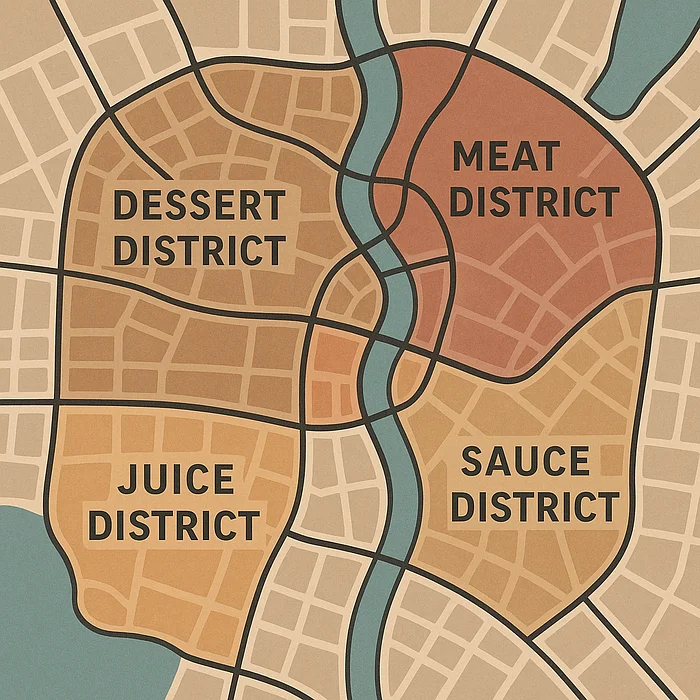
Limitation: RAG systems miss referenced content. If a recipe references another recipe elsewhere, the AI may generate guesses rather than consult the actual source material.
Agentic Search: The Future
Agentic RAG enables AI models to conduct independent research like human investigators. The system provides tools including:
- Web search
- Keyword search
- Semantic search
- Calculator
Models can run multiple searches, follow investigative leads, and compile information from various sources autonomously. Complex research previously requiring months can now be completed in minutes.
Trade-offs: Multiple searches consume more time and resources. Models may craft imprecise queries, give up prematurely, or focus on irrelevant details. Context window limitations affect result quality.
Looking Forward
As AI models improve and become more affordable, agentic search will enable faster, more sophisticated research capabilities. The technology promises a future where asking an AI to research complex topics might be as simple and quick as asking basic factual questions.
The critical challenge ahead involves adapting to systems where comprehensive analysis becomes as accessible as messaging, particularly for teams managing extensive datasets.