The Art and Science of Context Engineering
 Matan Weksler6 min
Why the future of AI isn't just about shiny new models, clever prompts, but how we are architecting the intelligent systems that power them.
In our latest blog post, we explored the concept of "prompt engineering" — the most well-known method for interacting with large language models (LLMs): craft a clever prompt, get a clever response. While this approach works well for general-purpose chatbots, it falls short in production environments where reliability, context-awareness, and workflow integration are essential. As AI evolves from novelty to mission-critical infrastructure, we need systems that go beyond prompt engineering, systems that understand your domain, adapt to your processes, and anticipate your needs.
Enter context engineering, a holistic discipline that's quickly becoming the backbone of next-generation AI-based systems. Rather than focusing on a single instruction, context engineering emphasizes the entire informational ecosystem built around the models, dramatically improving the reliability, precision, and power of AI agents.
In this article, we'll explore what context engineering truly entails, why it's the necessary evolution from prompt engineering, and how platforms like Pelles.ai are building the operating systems to master it.
From Prompting to Context Programming: A Necessary Evolution
Prompt engineering often feels like a series of linguistic tricks — adding incentives ("I'll give you a huge tip for a perfect answer") or pleading with the model to "think step-by-step." This method is akin to persuading a human assistant who may or may not fully grasp your intent. It's brittle and unpredictable.
But as LLMs become the computational core of complex workflows and AI agents, these surface-level interactions are no longer sufficient. The real challenge today isn't just writing better prompts, but architecting comprehensive contexts that enable models to reason, decide, and act with consistency.
As thought leaders like Andrej Karpathy have highlighted, we are moving from prompt engineering to "context programming." LLMs operate not just on a single prompt, but on the entire context window — the total information presented to them at any given moment. The quality, structure, and relevance of this context dictate the outcome.
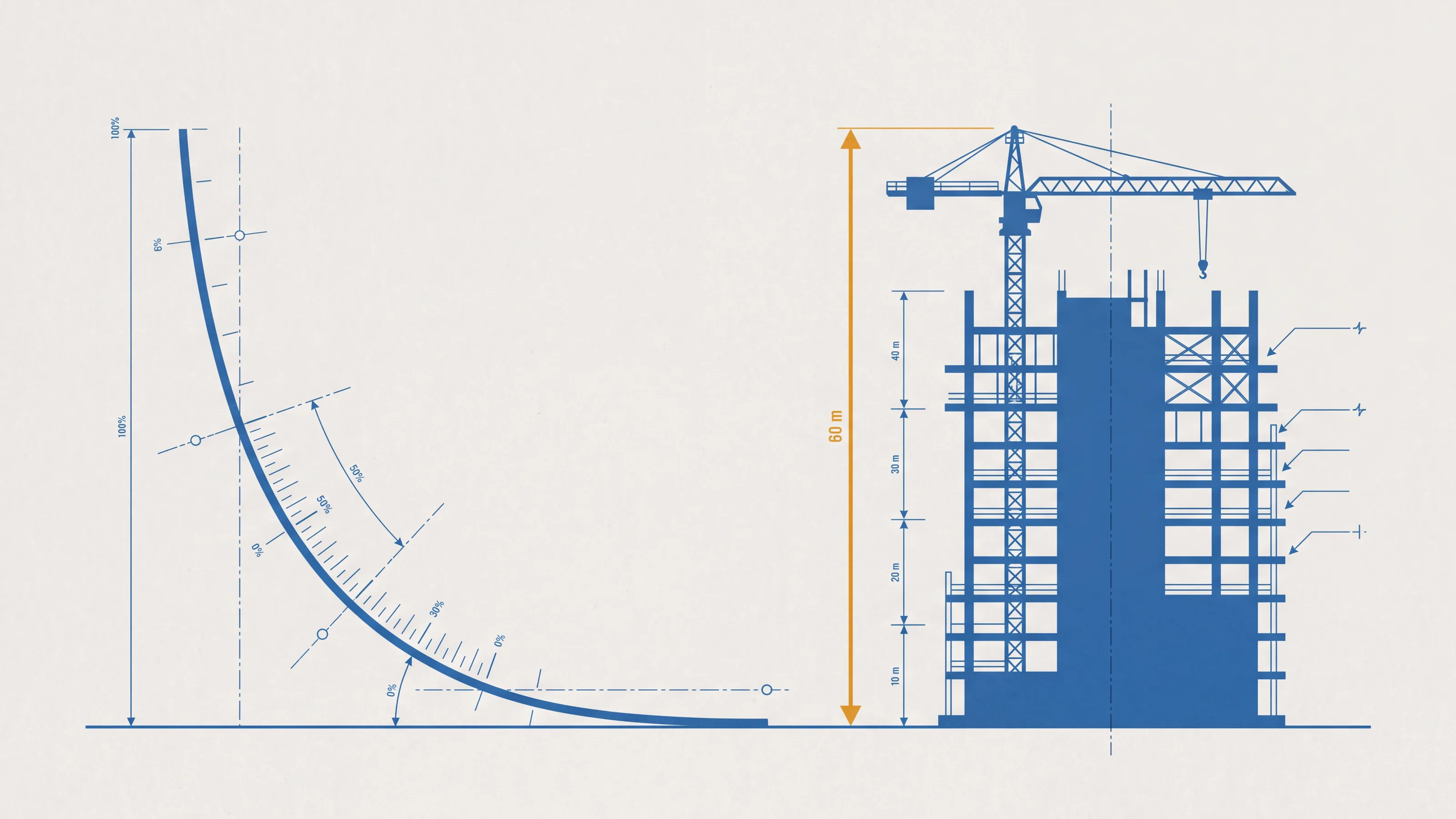
Imagine prompt engineering as replacing a light bulb, you need the right bulb, maybe a ladder, and if you don't have one, you improvise with a chair or a stack of books. It's about quick, non-repetitive, local adjustments that hopefully do the job right. Context engineering, however, is installing the entire electrical system in the project.
- Designing the shop drawing (System Prompt) ensures a clear structure and purpose.
- Selecting quality materials (Data Retrieval) guarantees durability and relevance.
- Employing the proper tools and machinery (Tool & API Calls) streamlines the building process and enhances capabilities.
- Maintaining accurate records and project logs (State Management) ensures continuity, coherence, and prevents costly mistakes.
Just as sloppy drawings or the wrong tools can lead to costly rework, a poorly crafted context can undermine AI performance. Too little context, and the model struggles. Too much — or irrelevant — context, and it risks confusion, hallucination, or inflated costs. Striking the right balance is the new frontier in effective AI deployment.
The Science of Context
Context engineering is a discipline grounded in rigorous research that goes beyond elaborate prompt engineering.
A Stanford study found that "structured contexts incorporating curated examples and external knowledge can boost LLM accuracy by as much as 30%." Similarly, MIT research emphasizes that thoughtful context window design is critical for enterprise-level AI performance.
Recent research in Nature has also highlighted that LLMs exhibit human-like cognitive biases; something as simple as the order of information can dramatically alter the output.
This is demonstrated in the "Needle-in-a-Haystack" benchmark, which assesses long-context understanding. A leading model improved its accuracy by over 10% simply by rearranging context data to mitigate positional bias, without any model retraining or fine-tuning. This highlights the impact of smarter, structured context.
Context Engineering in Practice: The AI Agent Operating System

This is where theory meets reality. Context engineering isn't an isolated task; it's the central function of what we at Pelles.ai see as an Operating System for AI Agents. Building a truly effective AI agent requires orchestrating multiple components in real-time.
A modern AI application is a sophisticated, real-time context engine — far more than a simple "ChatGPT wrapper." It must expertly manage:
- State and Memory: Seamlessly recalling previous parts of a conversation or workflow to maintain coherence.
- Knowledge Integration (RAG): Retrieving the right document chunks from a vector database at the right time, without overloading the context window.
- Tool Orchestration: Intelligently deciding when to search the web, query a database, or call a third-party API, then feeding the result back into the context.
- Cost and Latency Optimization: Caching results, prefetching data, and dynamically routing tasks to the most efficient model.
- Safety and Security: Implementing guardrails, protecting sensitive inputs, and ensuring compliance — tasks that are fundamental to enterprise-grade systems.
Manually coding this orchestration is the reason so many internal AI projects become mired in complexity and hidden costs. This is precisely the challenge that we at Pelles.ai are designed to solve — by providing the structured workflows and infrastructure to manage context at scale.
Why This Matters for You
For anyone using AI applications, the difference between a cool gadget and a true AI partner comes down to one thing: context.
Without it, AI tools are amnesiac. They give generic answers because they can't access your company's real-time data. You ask for a VAV box submittal and get a web result instead of the approved document from Procore. You ask it to draft an RFI and it spits out a blank template, forcing you to manually hunt down the drawing numbers, spec sections, and gridlines. This isn't an assistant; it's another tool that makes you do all the work.
A context-engineered AI agent, however, changes the game completely. It's connected to your project files, your systems, and your workflow.
The conversation shifts from this: "Draft an RFI." → Result: A blank template and more manual work for you.
To this: "Draft an RFI for the ductwork clash on drawing M-501."
A context-aware partner doesn't just respond — it executes. It instantly:
- Finds the specific clash and references the conflicting sprinkler drawing (F-102).
- Pulls the relevant spec section and drawing details.
- Applies your company's standard RFI format and professional tone.
This isn't just about getting a "smarter" answer. It's about creating AI systems that are fundamentally more reliable, transparent, and capable. The end result is a system that you can actually do meaningful work with, transforming it from a novelty you experiment with into an indispensable assistant you can rely on.
The Future is Context-Aware

The next time you engage with a powerful AI, remember: Are you spending your time coaching it on every single detail, or is it already equipped with the project blueprints?
While the tech world is buzzing with new models, the real breakthrough for our industry will come from mastering the context they operate in. The future of AI in construction isn't about writing a more clever prompt; it's about building AI agents that already know your job, understand the drawings, and help you protect your bottom line.
The challenge ahead is making this powerful capability accessible. At Pelles.ai, we are building the infrastructure to do just that — turning abstract AI potential into a practical tool that prevents rework, speeds up communication, and makes projects more profitable.
In this new landscape, the context you build is the most valuable asset you have.
Frequently asked questions
What is context engineering in AI?
Context engineering is the discipline of architecting the entire informational ecosystem around an AI model — not just the prompt, but system instructions, retrieved documents, tool outputs, memory, and state management. Research from Stanford shows that structured contexts with curated examples can boost LLM accuracy by up to 30%, making it far more impactful than prompt tricks alone.
How is context engineering different from prompt engineering?
Prompt engineering focuses on crafting a single clever instruction to get a better response. Context engineering goes further by designing the full context window the model operates on — including data retrieval, tool orchestration, state management, and safety guardrails. If prompt engineering is replacing a light bulb, context engineering is installing the entire electrical system.
Why does context matter for construction AI tools?
Without proper context, AI tools give generic answers — returning web results instead of approved project documents, or producing blank templates instead of pre-filled RFIs. Context-engineered AI connects to your project files, specs, and workflows so it can draft an RFI with the correct drawing references, spec sections, and your company's standard format automatically.